The Importance of Conditioner in Your Pool
- adaralp
- Aug 1, 2025
- 6 min read
What Is Pool Conditioner and Why Should You Care?
If you've ever wondered why your pool's chlorine seems to disappear so quickly during those hot summer months, the answer might be simpler than you think. Pool conditioner—also known as cyanuric acid (CYA) or stabilizer—is the unsung hero of pool maintenance that many pool owners overlook.
Think of pool conditioner as sunscreen for your chlorine. Just like how your skin needs protection from harmful UV rays, your pool's chlorine needs a shield against the sun's relentless attack. Without this protection, you might as well be throwing money into your pool, watching it evaporate along with your chlorine.
At Adara Lawn, Pool and Landscaping, we've seen countless pool owners struggle with maintaining proper chlorine levels, often unaware that conditioner is the missing piece of their pool care puzzle.
How Conditioner Works: The Science Behind the Magic
Cyanuric acid works by forming a chemical bond with free chlorine molecules in your pool water. This bond acts like a protective shield, preventing the sun's ultraviolet rays from breaking down the chlorine too quickly.
When you add chlorine to your pool without conditioner, up to 90% of it can be destroyed within just 2 hours of bright sunlight exposure. That's right—nearly all your chlorine could be gone before you even finish your poolside lunch!
The science is straightforward but powerful:
- Cyanuric acid molecules surround and temporarily bind to chlorine
- This bond protects chlorine from UV degradation
- The chlorine is slowly released back into the water as needed
- This creates a "chlorine reserve" that provides consistent sanitization
This slow-release mechanism is why conditioned pools maintain more stable chlorine levels throughout the day, requiring less frequent chlorine additions and providing more consistent protection against bacteria and algae.
The Benefits of Proper Conditioning
Using the right amount of conditioner in your pool offers several key advantages:
1. Cost Savings
One of the most immediate benefits is financial. When your chlorine lasts longer, you buy less of it. It's that simple. Many pool owners report cutting their chlorine usage by 25-50% after properly conditioning their pool water. Over a swimming season, this can translate to hundreds of dollars saved.
2. Consistent Sanitation
A properly conditioned pool maintains more stable chlorine levels throughout the day. This means consistent protection against bacteria, viruses, and algae—even during the hottest part of the day when UV radiation is strongest.
3. Less Time on Maintenance
With stabilized chlorine levels, you'll spend less time testing and adjusting your pool's chemistry. This means more time actually enjoying your pool and less time maintaining it. Who wouldn't want that?
4. Reduced Chlorine Odor and Irritation
Properly conditioned pools typically require lower active chlorine levels to maintain sanitation. Lower free chlorine means less of that distinct "pool smell" and reduced potential for eye and skin irritation.
The Risks of Improper Conditioner Levels
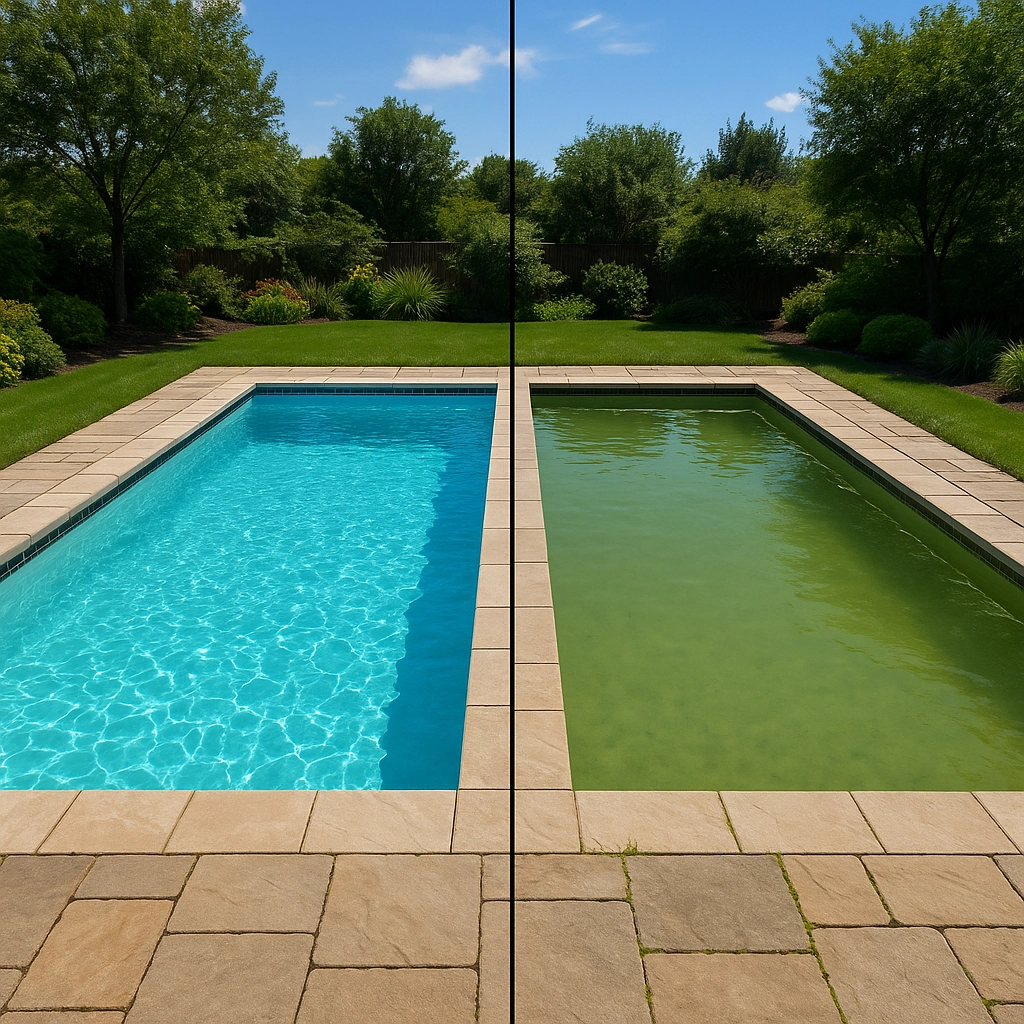
While conditioner is essential, it's possible to have too much of a good thing. Finding the right balance is critical for your pool's health and your swimming experience.
Too Little Conditioner (Under 30 ppm)
When conditioner levels are too low, chlorine becomes vulnerable to UV degradation. This results in:
- Rapid chlorine loss, especially on sunny days
- Difficulty maintaining proper sanitization
- Increased risk of algae growth
- Higher chlorine costs
- More frequent maintenance
Too Much Conditioner (Over 100 ppm)
Excessive conditioner levels can be just as problematic as insufficient levels:
- "Chlorine lock" where chlorine becomes less effective at sanitizing
- Increased difficulty in combating algae blooms
- Need for higher chlorine levels to achieve the same sanitizing effect
- Potential water cloudiness
- The only remedy is partial or complete water replacement
At Adara Lawn, Pool and Landscaping, we recommend maintaining conditioner levels between 30-50 ppm for most residential pools. This range provides optimal chlorine protection without reducing its effectiveness.
How to Properly Add and Maintain Conditioner
Adding conditioner to your pool isn't complicated, but doing it correctly ensures you get maximum benefit without wasting product.
Testing First
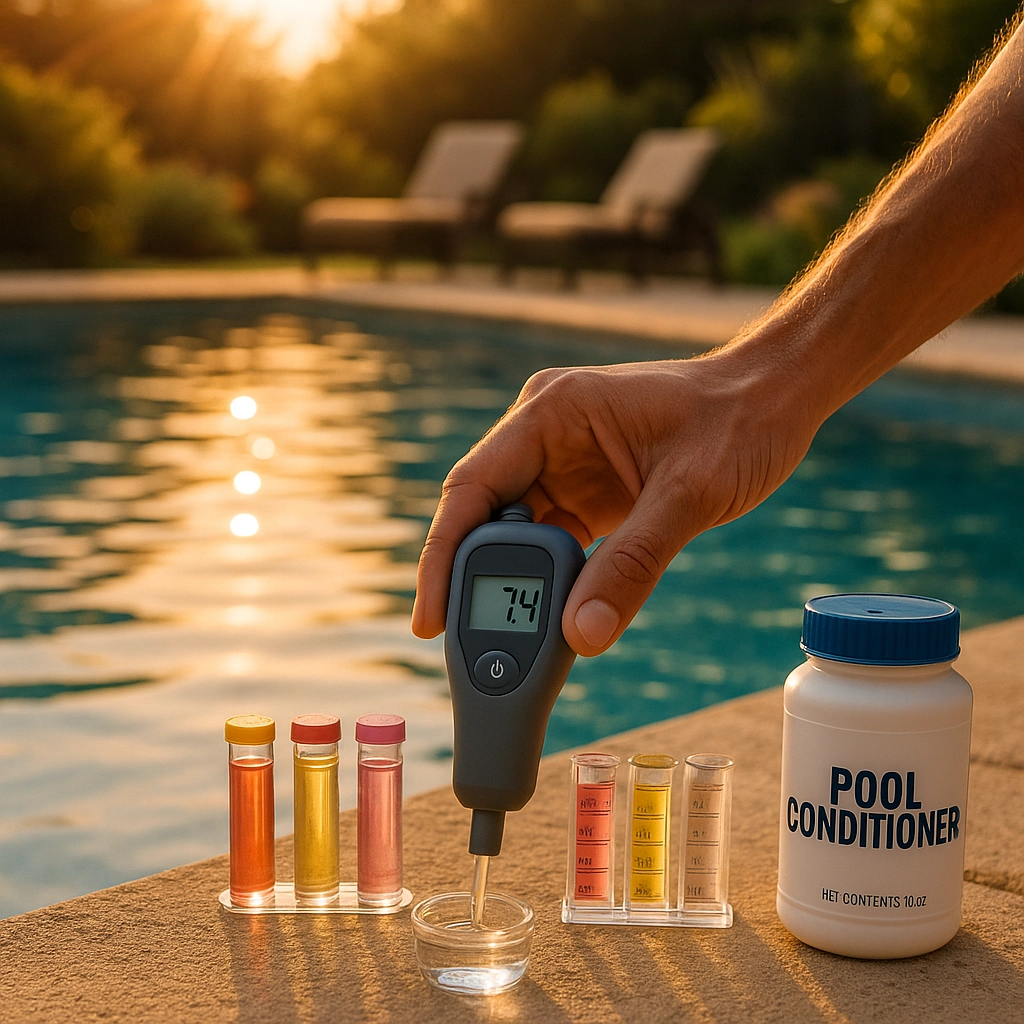
Before adding any conditioner, test your current CYA levels. Pool test kits or test strips can measure this, or you can bring a water sample to your local pool store (or call us for a professional pool inspection).
Application Process
- Calculate how much conditioner you need (typically 1 pound raises CYA by about 10 ppm in a 10,000-gallon pool)
- Turn off your pool pump
- Remove skimmer baskets
- For granular conditioner:
- Pre-dissolve it in a bucket of warm water if possible
- Add directly to the deepest area of the pool
- Allow 2-3 days for complete dissolution
- For liquid conditioner:
- Add it directly to the pool according to the manufacturer's instructions
- It dissolves much more quickly than granular forms
- Resume normal filtration after a few hours
Maintenance Tips
- Unlike other pool chemicals, conditioner does not get used up or evaporate
- You only need to add more when you lose water (backwashing, splashing, draining)
- Test CYA levels monthly during swim season
- Avoid backwashing your filter for several days after adding conditioner
Seasonal Considerations for Conditioner
Your pool's conditioner needs change throughout the year based on several factors.
Spring Opening
When opening your pool:
- Test and adjust conditioner levels early
- Aim for 30-50 ppm before the hottest weather arrives
- Add conditioner before increasing chlorine levels
Mid-Summer Maintenance
During peak swimming season:
- Test conditioner levels more frequently
- Be aware that heavy pool use with lots of splashing can gradually reduce CYA levels
- Adjust as needed to maintain the optimal range
Fall Closing
Before closing your pool for winter:
- There's no need to adjust conditioner levels specifically for winter
- The CYA will remain in the water until spring
- Make note of the level so you know what adjustments might be needed next spring
Common Questions About Pool Conditioner
Is conditioner the same as chlorine stabilizer?
Yes! Conditioner, stabilizer, and cyanuric acid (CYA) all refer to the same chemical that protects chlorine from UV degradation.
Do I need conditioner if I have a salt water pool?
Absolutely. Salt water pools generate chlorine through electrolysis, but this chlorine is still vulnerable to UV degradation. Conditioner is just as important in salt water pools as in traditional chlorine pools.
Can I use conditioner in an indoor pool?
While indoor pools have much less UV exposure, a small amount of conditioner (10-30 ppm) can still be beneficial, especially if the pool area receives natural sunlight through windows or skylights.
How often should I add conditioner?
Unlike chlorine, conditioner doesn't get used up. You only need to add more when water is lost from the pool or when test results show levels have dropped below the recommended range.
What happens if my conditioner level gets too high?
Very high CYA levels can reduce chlorine efficiency, making it harder to combat algae and bacteria. If levels exceed 100 ppm, you may need to partially drain and refill your pool to dilute the concentration.
Professional Pool Maintenance
While maintaining proper conditioner levels isn't overly complicated, it's part of a larger pool chemistry balance that can sometimes be challenging to manage. At Adara Lawn, Pool and Landscaping, our professional pool maintenance services take the guesswork out of keeping your pool in perfect condition.
Our technicians are trained to test and adjust all aspects of your pool's chemistry, including conditioner levels, ensuring your pool remains crystal clear, properly sanitized, and ready for enjoyment all season long.
The Bottom Line on Pool Conditioner
Pool conditioner might not be the most exciting aspect of pool ownership, but it's certainly one of the most important for maintaining a healthy, easy-to-care-for swimming environment. By understanding and properly managing your pool's conditioner levels, you'll save money on chemicals, reduce maintenance time, and enjoy a more comfortable swimming experience.
Remember these key points:
- Conditioner protects chlorine from UV degradation
- Maintain levels between 30-50 ppm for optimal results
- Only add more when water is lost or levels test low
- Both too little and too much conditioner can cause problems
Whether you're a DIY pool owner or prefer to leave the chemistry to the professionals, paying attention to your pool's conditioner levels will pay dividends in lower costs and better swimming conditions all season long.
Ready to take the hassle out of pool maintenance? Contact us at Adara Lawn, Pool and Landscaping for a consultation or to schedule regular pool service. Your pool—and your wallet—will thank you!
Comments